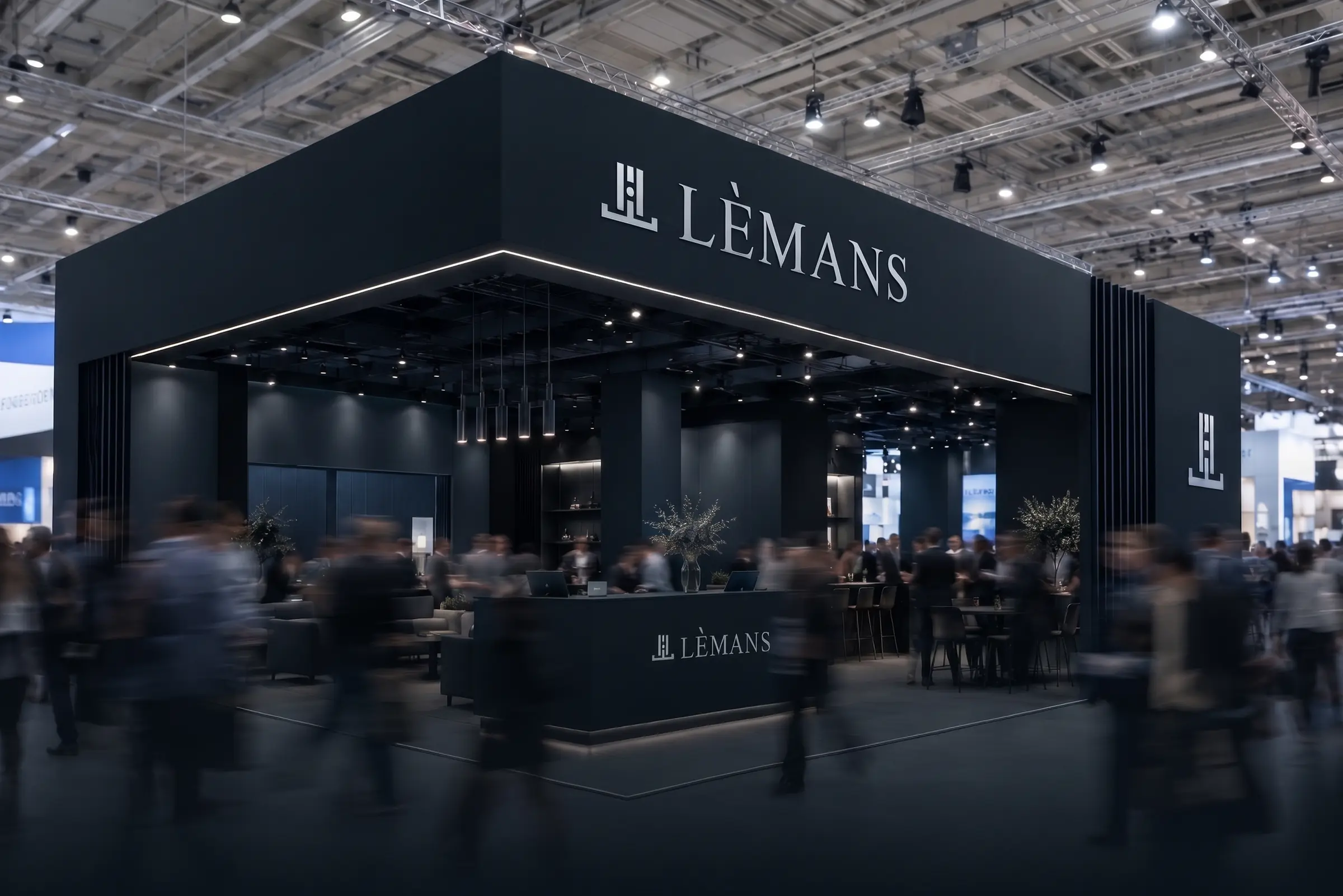
A fair between growth and hard reality
Expo Real 2026 brought more than 42,000 participants from 74 countries to Munich from 5 to 7 October, slightly more than the previous year. According to Messe München, 1,777 exhibitors from 37 countries took part across around 76,000 square metres in seven halls, compared with 1,742 exhibitors from 34 countries in 2025. The figures describe a stable industry gathering, but not a new upswing. The fair's CEO, Stefan Rummel, himself spoke of an ambivalent mood: many German projects were under pressure, while international markets were sending encouraging signals for 2027.
This picture matches the impressions of the trade press. On the first day, Börsen-Zeitung described cautious confidence: buyers and sellers had moved closer on pricing than a year ago, but real momentum was still missing. Geopolitical risks, the turn in interest rates and high energy prices kept uncertainty elevated, and activity had slowed noticeably in the third quarter. The trade portal Haufe spoke of a defiant confidence and asked how far it would carry. A representative of Hamburger Sparkasse was quoted as expecting lenders to face difficult conditions until around 2030.
For decision-makers in industrial and logistics property, this mix is revealing for one reason: demand is currently moving faster than financing. While capital is allocated more selectively and return requirements are rising, new occupier groups with their own requirements are emerging at the same time. The fair made both visible, often in the same conversations. Occupiers and investors are also asking the same questions with different urgency: occupiers look for available space with a secure energy supply, investors look for tenants with robust covenants and assets that are fit for the future. Where both perspectives meet, deals are closed; where they do not, negotiations drag on.
Infrastructure as the industry's new common thread
For the first time, Expo Real featured InfrastructureNow, a dedicated focus on energy, digital and social infrastructure and defence. The organisers report a very positive response from exhibitors and visitors. According to the fair's report, Michael Henn of Commerz Real said infrastructure was becoming part of the core strategy in real estate, because the value of a building increasingly depends on the infrastructure behind it. Henning Koch, CEO of Commerz Real, spoke of a super-cycle spanning generations.
For logistics property, this shift is more than a change of label. Grid connection, roof space for photovoltaics, charging infrastructure and storage now determine location quality and valuation. A warehouse without a credible energy outlook loses alternative-use potential, while a site with a secured connection gains substance. The fact that the industry now discusses infrastructure as an asset class in its own right suggests that investors will increasingly value logistics space as part of an overall system of energy, data and transport.
The appearance of the Federal Ministry of Defence was also striking. According to Haufe, Alexander Götz used the expansion package to court construction companies and asset managers, although the report viewed this approach rather critically. Johannes Adomeit of Peter Gross Bau pointed out that funds from the infrastructure programmes also flow into Bundeswehr buildings. On data centres, Jan-Hendrik Goldbeck warned against underestimating their complexity: they are machines dressed up as buildings. The remark applies to other specialist properties too. The more technical the use, the less a standard product will do.
Who rents Germany's logistics properties?
The core content for the sector came on the second day from the Logix initiative, with a panel preceded by a presentation by Christoph Tripp. The professor of distribution and retail logistics at Technische Hochschule Nürnberg addressed the question of tenants amid structural change, Chinese expansion and the defence boom. His assessment fell into two parts with different time horizons.
According to Tripp, Chinese e-commerce providers are in a phase clearly focused on building up logistics structures. He estimates the medium-term space potential in Europe at 1 to 1.5 million square metres, around a quarter of it in Germany. Arithmetically, this implies 250,000 to 375,000 square metres for Germany, a figure the speaker did not state himself. He sees defence as the second growth driver, with take-up of 150,000 to 250,000 square metres per year in Germany until 2028. Together, the two groups could account for up to ten percent of take-up.
Two caveats belong to a careful reading. First, these are expert estimates by a single speaker, and the methodology was not set out in the coverage. Second, the time horizons do not match: the platform forecast is medium-term, while the defence figure ends in 2028. Tripp expects platform demand to reach saturation within a few years, whereas defence demand is considerably more long-term. For portfolio planning, this suggests a clear distinction: one demand group is a build-up impulse, the other a structural component.
Platform retail: expansion with regulatory tailwind
The fact that platforms are densifying their logistics in Europe also has a regulatory background. Since 1 July 2026, the EU has applied a levy of three euros per product category on consignments of up to 150 euros from third countries, initially limited until 1 July 2028. The previous customs duty exemption threshold has thus been abolished. Large providers are reportedly shifting stock to warehouses within the EU and delivering from there instead of sending individual parcels across the border. Data on the actual volume effects is still thin and should be read with caution, but the direction of the incentives is clear.
For owners and developers, this calls for a trade-off. Platform tenants seek large, well-connected space, often at short notice and with high specification requirements. However, the covenant strength and planning horizons of these occupiers differ from those of established retail or industrial companies. Anyone letting such space will need to weigh lease terms, security and reinstatement provisions more carefully and pay attention to alternative-use potential. A warehouse that only works for a single operating model carries a higher re-letting risk once demand saturates. In terms of location, motorway and airport access, proximity to metropolitan areas and expansion reserves favour space that remains marketable after a change of tenant.
Defence: long-term demand, but uneven
Demand from the defence sector is already visible in the data, but it does not follow a straight line. According to the Federal Statistical Office, real new orders in manufacturing fell by 10.6 percent month on month in August. Excluding large orders, the decline was just 0.1 percent. The fall is almost entirely due to other vehicle manufacturing, which includes aircraft, ships, rail and military vehicles, where orders slumped by 61.5 percent after an exceptional rise in July. Official statistics thus show how strongly individual large orders shape the monthly figures.
For space decisions, this is a useful reminder. What matters is not the monthly figure, but whether and when orders are translated into production, assembly and storage capacity. Early examples show that existing sites are being expanded: Rheinmetall reportedly plans around 1,200 additional jobs and a technology centre in Neuss, and RENK is investing more than 20 million euros in Rheine by 2030. Demand therefore arises first in existing stock and around existing sites, among suppliers, in testing and spare-parts warehouses and in space with heightened security and permitting requirements. Developers who incorporate such requirements early into concept and floor plan gain an edge. Landlords should also understand the particular needs of these occupiers, such as classified information protection, access controls and longer permitting phases. In return, defence occupiers often offer long commitments and an order book backed by public budgets, which increases predictability without removing the dependence on political budget decisions.
Building higher, financing more cautiously
Another theme at the fair fits the shortage of space in metropolitan areas and at port locations. Logix presented a study on multi-storey logistics properties led by Roland Busch of the University of Wuppertal. It defines the format, records completed projects in Europe and examines their structural and functional characteristics. It is the first of two planned studies, so findings on economic viability are still to come. Even so, the attention given to the topic is a meaningful signal: where land is scarce and expensive, vertical use comes into focus, with higher construction costs, different access concepts and a valuation logic of its own.
Financing sets the limits. According to Bundesbank and ECB data, the cost-of-borrowing indicator for new corporate loans in the euro area stood at 3.77 percent in August, after 3.80 percent in July. The ECB's rate increase on 10 September is not yet reflected, so part of the rise in costs is likely to show only in the coming months. Industry voices at the fair said banks are slowly accepting discounts on existing loans but remain reluctant on new lending. Hansemerkur Grundvermögen noted that many transactions arise from special situations such as refinancings or changes of ownership, which can open up opportunities for long-term investors.
For logistics portfolios, this means: those with equity and high-quality assets can use the room for manoeuvre in a selective market. Those dependent on refinancing should be able to evidence tenant structure, remaining lease terms and energy concept early, because lenders increasingly differentiate by quality.
Strategic relevance and outlook
For industrial and logistics property, Expo Real 2026 made three things clearer. First, the occupier base is broadening. Platform retail and defence are joining the traditional demand from retail, industry and logistics services, with different time horizons and requirements. Second, infrastructure is becoming a valuation factor. Energy, grid connection and technical specification determine alternative-use potential and therefore long-term value. Third, financing remains the bottleneck that delays projects and rewards quality.
For investors, this means treating demand forecasts as scenarios rather than planning figures. Developers should design floor plans, energy concepts and security standards in a modular way so that assets suit several occupier groups. Occupiers, in turn, gain negotiating room where landlords take letting risks seriously, and benefit from clear lease structures with options on part areas and terms.
The outlook remains cautious. Data in the coming months, including September figures on production and orders and the effect of the rate rise on financing costs, will show how robust the demand impulses are. The next Expo Real takes place from 4 to 6 October 2027. By then it will be possible to measure which of the expectations voiced in Munich have translated into leases and building permits.